2026-08-25 · Michael
Fixing Slow Drains in Older Coral Gables Homes
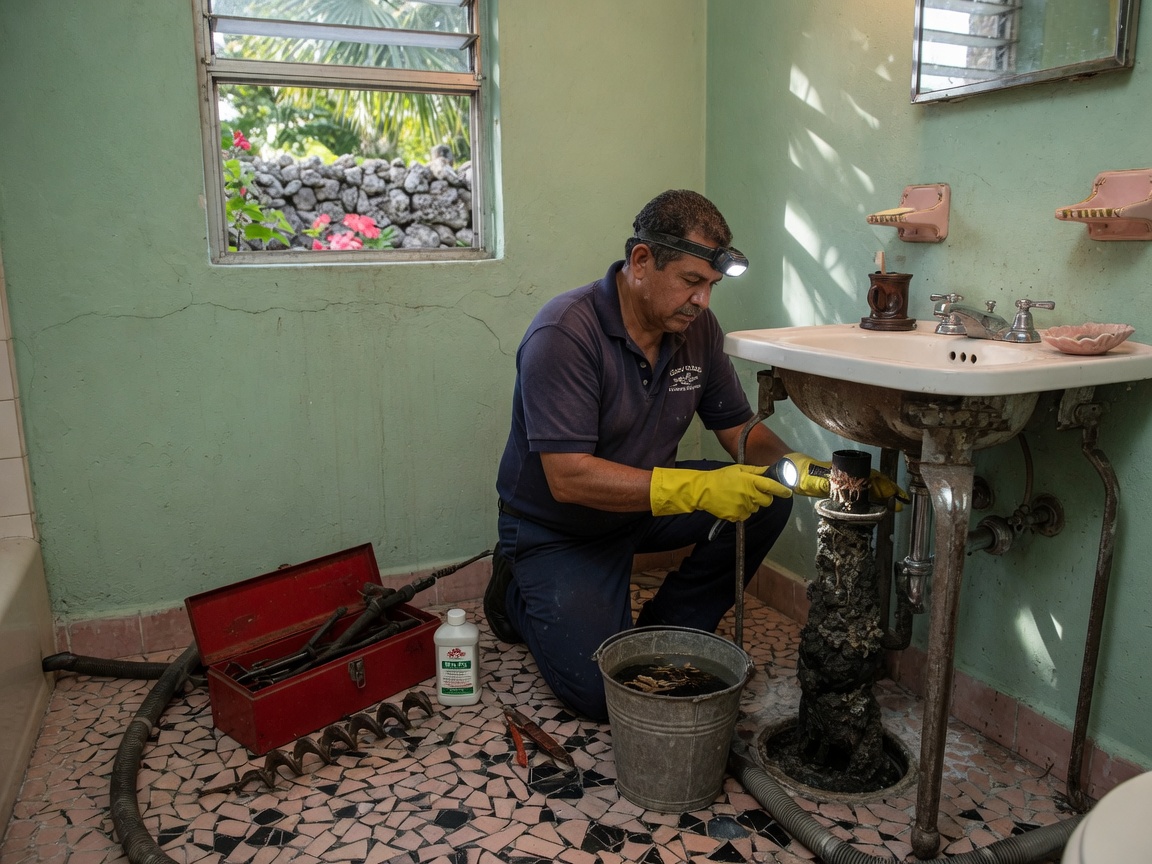
Slow drains in older Coral Gables homes are typically cleared by addressing buildup in 50- to 80-year-old cast-iron or galvanized lines using hydro jetting or mechanical snaking, with most jobs completed in 1–3 hours when caught before full blockage. These homes, built from the 1920s through 1960s in neighborhoods like Coral Gables, often feature narrow 1.5- to 2-inch drain stacks that collect grease, soap scum, and tree roots from the area's lush landscaping. Miami-Dade County's tropical monsoon climate brings intense summer downpours that saturate soil and push roots toward pipe joints, accelerating clogs compared to drier regions.
Causes Tied to Coral Gables Housing Stock
Coral Gables properties frequently sit on limestone-based soil that shifts slightly during wet seasons, stressing older drain lines and creating small cracks where roots enter. Homes near Vizcaya Museum or along Ponce de Leon Boulevard often retain original plumbing that has never been updated, allowing decades of mineral scale from hard water to narrow pipe interiors to 50% or less of original diameter. Hot, wet summers increase condensation inside pipes and encourage bacterial growth that binds with fats from kitchen sinks, forming stubborn mats that slow water flow to a trickle. Nearby areas like Coconut Grove and Little Havana share similar vintage construction, but Coral Gables' larger lots and mature oak trees add extra root pressure not seen in newer subdivisions.
Step-by-Step Diagnosis for Homeowners
Start by running water in each fixture while listening for gurgling in adjacent drains, which indicates shared line blockage rather than isolated fixture issues. Check cleanout access points, often located in the front yard or garage of Coral Gables homes, for standing water or slow seepage after heavy rain. Measure flow rate at the lowest point such as a laundry sink; anything below 3 gallons per minute signals significant restriction. Avoid chemical cleaners on older pipes because they can erode remaining metal and worsen leaks before a proper mechanical cleanout occurs.
Clearing Methods That Work on Local Pipes
Mechanical drum augers reach 50–75 feet into main lines common under Coral Gables streets and break up root masses without excavation in most cases. For grease and scale buildup, hydro jetting uses 4,000 psi water streams to scour pipe walls clean, restoring full diameter in 2-inch and 3-inch lines typical of these homes. When roots have penetrated joints, follow jetting with a camera inspection to confirm no further damage before backfilling. Homeowners in nearby Miami Beach and Hialeah report similar success rates when the same methods are applied before lines collapse entirely.
Long-Term Prevention in Tropical Conditions
Install 3-inch or larger cleanouts at every 90-degree turn during any remodel to allow future access without wall demolition. Route downspouts away from foundation lines to reduce soil saturation that drives roots toward drains during Miami-Dade's summer storms. Schedule annual camera inspections every 8–12 years for homes built before 1970, catching scale and root intrusion while pipes remain repairable. Preparing plumbing for hurricane season in Miami covers additional steps that protect drains from storm surge and debris common in the region.
Knowing When Professional Help Is Required
Persistent slow drains after two snaking attempts usually mean the line has collapsed or holds multiple root intrusions that require emergency drain cleaning equipment beyond homeowner tools. Gurgling toilets combined with yard odors point to main sewer involvement best handled by technicians familiar with Miami-Dade County permitting. Good Plumbers FL remains available 24 hours, 7 days a week for Coral Gables residents facing sudden backups after heavy rain.