2026-08-25 · Michael
What to Know About Main Line Clogs in Brickell Condos
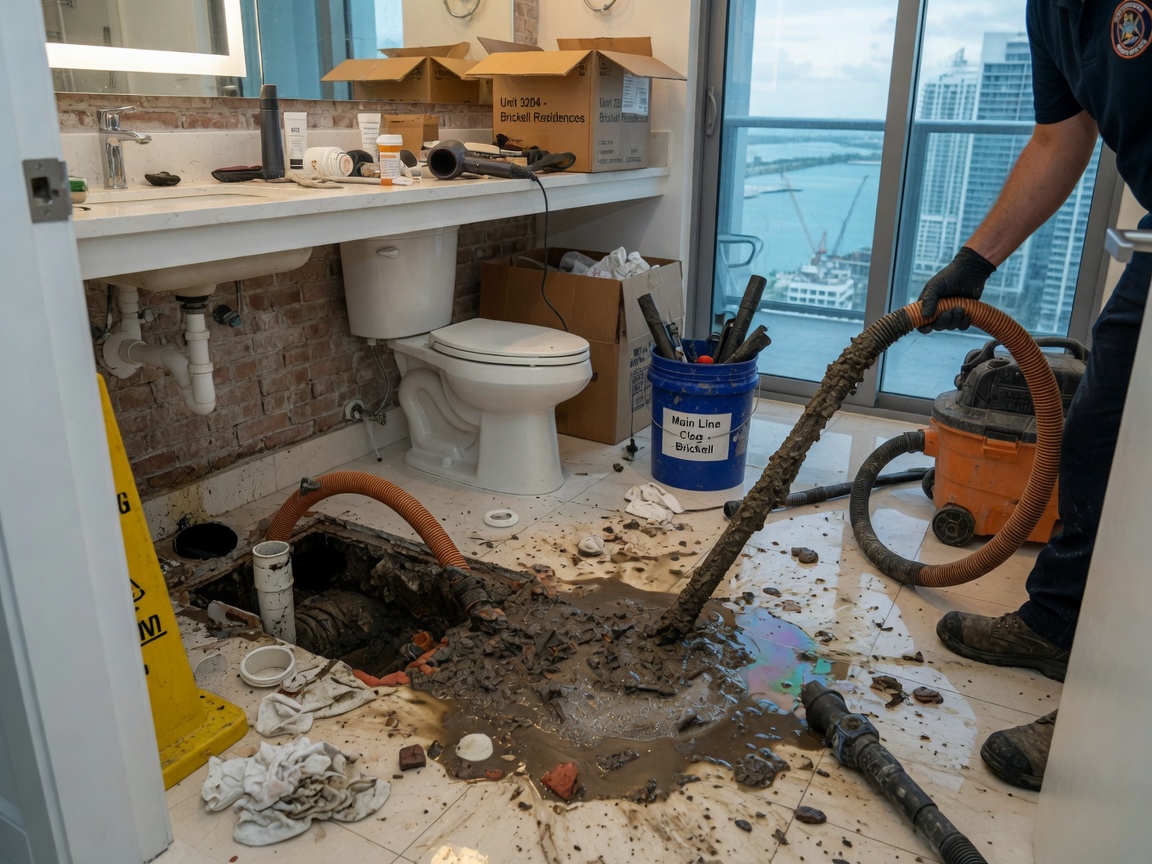
Main line clogs in Brickell condos typically surface first in units on lower floors where shared 4-inch or 6-inch stacks connect to the city sewer in Miami-Dade County. These blockages build from grease, wipes, and sediment that collect in aging cast-iron pipes common in buildings constructed during the 1980s and 1990s, then worsen when hot wet summers deliver sudden downpours that back up the system.
Common Causes in Brickell High-Rises
Brickell sits on filled land near Biscayne Bay, so many condo stacks run through tight utility chases that make root intrusion less common than in single-family homes yet allow scale and grease to coat walls faster. Residents in towers near the Bayside Marketplace or Freedom Tower often report problems after flushing non-flushable items that travel down multiple floors before lodging at a bend or joint. Miami's tropical monsoon climate adds another layer: intense summer rains wash street debris into storm drains that sometimes share proximity with sewer laterals, increasing the load on already narrow lines.
Older buildings in the neighborhood also face corrosion inside the pipe walls after decades of constant humidity and temperature swings between air-conditioned interiors and the exterior heat. When multiple units on the same stack run dishwashers or showers at peak evening hours, the combined flow can dislodge partial clogs and send them farther down to the main line connection point.
Signs That Point to a Shared Main Line
Multiple toilets or drains backing up at once across several units usually indicates the clog sits below the individual branch lines rather than inside one apartment. Gurgling sounds from floor drains on the lowest parking levels or laundry rooms often precede visible water rising in tubs on upper floors. In Brickell towers, these symptoms appear most frequently after heavy afternoon storms because the sudden volume of water has nowhere to go once the main line is restricted.
A persistent sewer odor near the building's utility room or in ground-floor units can signal the same issue, especially when the smell intensifies during the wet season. Homeowners notice slow drainage in multiple fixtures that does not clear with a simple plunger, confirming the obstruction lies farther downstream in the shared stack.
Weather and Seasonal Patterns That Worsen Clogs
Miami-Dade's hot wet summers bring frequent thunderstorms that can overwhelm partially restricted lines within minutes. Water from these events enters the system through roof drains and exterior cleanouts, pushing accumulated grease farther into the main line until it forms a solid plug. Properties near Vizcaya Museum or along Brickell Avenue see this pattern repeat each year because the dense condo layout funnels runoff quickly toward the same sewer mains.
During drier winter months the problem shifts toward scale buildup inside the pipes, but the summer pattern remains the dominant trigger for emergency calls. Dealing with clogged drains after tropical storms explains how sudden rainfall volumes interact with existing restrictions in similar Miami buildings.
Inspection and Clearing Options
Plumbers begin with a camera inspection through the cleanout nearest the building's sewer connection to locate the clog without guessing. In Brickell condos this often means accessing the utility room or an exterior vault rather than working inside individual units. Once identified, hydro jetting at 3,500–4,000 psi removes grease and scale from the pipe walls while restoring full flow, a method that handles the long vertical runs typical in high-rises better than mechanical snakes alone.