2026-08-25 · Michael
Why Saltwater Intrusion Affects Pipes in Miami Beach
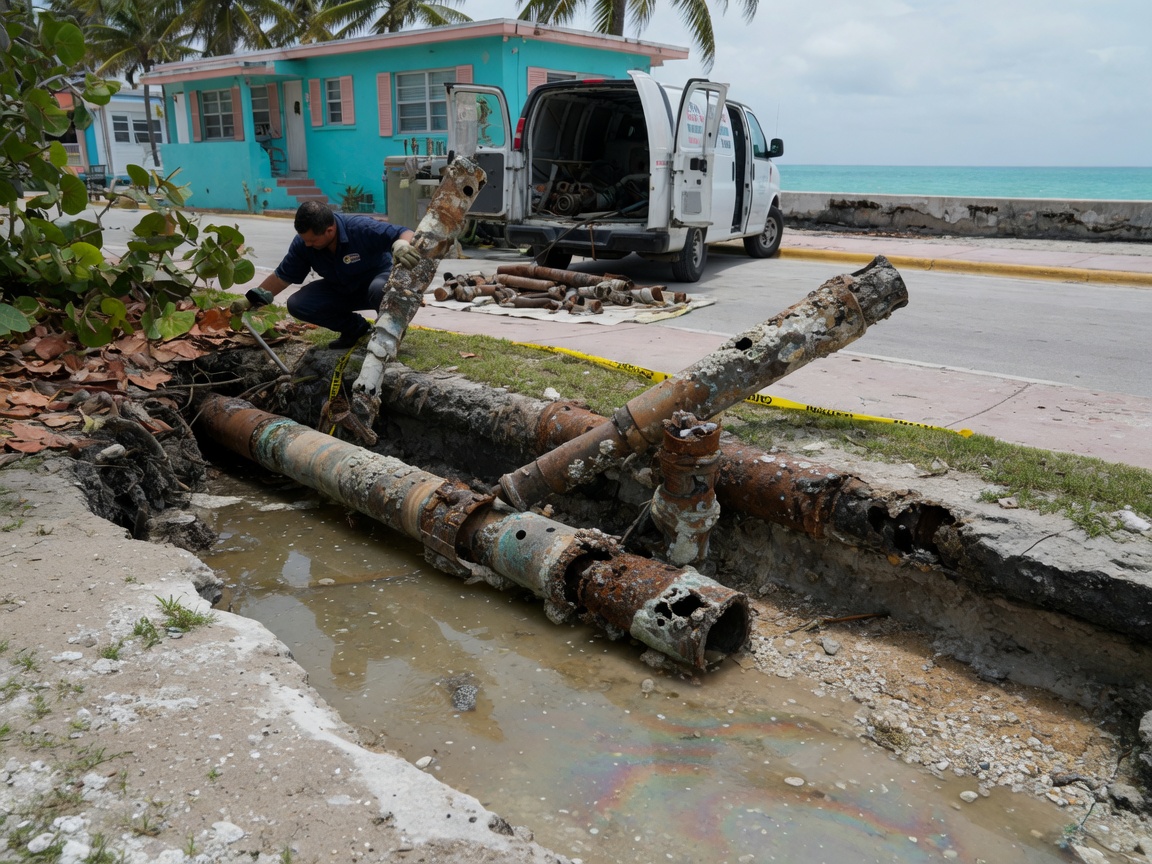
Saltwater intrusion shortens copper and galvanized pipe lifespan to 8–15 years in Miami Beach homes compared to 25–40 years inland because chloride levels in groundwater often exceed 250 ppm near the coast.
How Miami Beach Geology Allows Saltwater Infiltration
Miami Beach sits on porous oolitic limestone that lets seawater move inland through the Biscayne Aquifer, especially during king tides and tropical monsoon season storms. The county's flat terrain and high water table mean even moderate rainfall or surge events push saline water into residential service lines. Homes built before 1980 in South Beach and Mid-Beach commonly have galvanized steel or early copper lines that corrode from the outside in once chlorides reach the soil around the foundation. Seasonal wet summers raise the water table by several feet, increasing contact time between pipes and brackish water. Property owners notice pinhole leaks first in outdoor irrigation lines and slab penetrations where soil stays saturated longest.
Effects on Common Pipe Materials in Coastal Homes
Copper pipes develop blue-green patina and pinholes when exposed to chloride concentrations above 200 ppm, while galvanized steel loses its zinc coating within 5–8 years under the same conditions. PVC holds up better but joints fail when soil movement from repeated flooding stresses the glue lines. In neighborhoods like South Pointe and Flamingo Park, plumbers routinely replace sections of 1/2-inch and 3/4-inch copper that show external pitting after 12–18 years. The combination of salt and the area's naturally hard water accelerates internal scale plus external corrosion, creating leaks that appear suddenly after a heavy rain event. Regular inspection of exposed lines under homes on pilings reveals the pattern earlier than in slab-on-grade construction common farther west.
Seasonal and Storm-Driven Patterns of Intrusion
Tropical monsoon climate brings 40–60 inches of rain between June and October, raising groundwater levels and allowing saltwater to migrate farther inland through the aquifer. Nor'easters and hurricane storm surges add episodic spikes that push saline water into yards and under slabs in areas like Surfside and Bal Harbour. After these events, service calls for unexplained low pressure or discolored water increase because the salt has reached older supply lines. The Miami Beach city page documents how elevation differences of just a few feet determine which blocks experience repeated intrusion. Residents in lower-lying blocks see pipe issues 3–5 years sooner than those on the slight ridge along Alton Road.
Practical Steps to Identify Saltwater Damage Early
Check outdoor hose bibs and irrigation valves first after heavy rain for white crust or green staining on fittings. Monitor water heater anode rods annually; they deplete faster when chlorides are present. Homeowners can request a simple conductivity test on tap water during the wet season to spot rising salinity before leaks appear. When pinhole leaks start, water leak detection and repair locates the affected runs without unnecessary demolition. The related post on water softener considerations for Miami's hard water explains how additional mineral content compounds the corrosion once salt is already present.
Understanding these local conditions helps property owners in Miami Beach plan targeted replacements rather than waiting for repeated emergency calls. Older stock in Miami-Dade County requires closer monitoring of buried lines than newer construction built with PVC from the start.