2026-08-25 · Michael
Preventing Pipe Sweating in Unconditioned Miami Garages
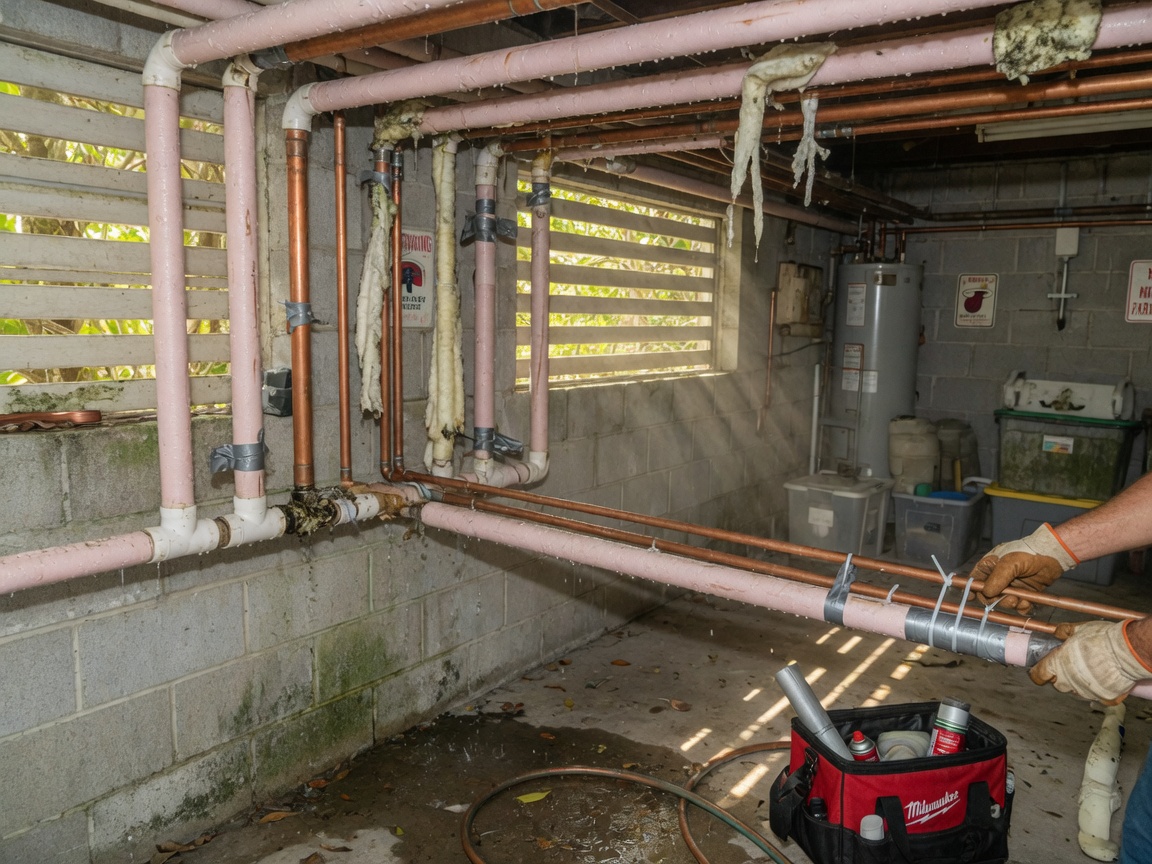
In Miami-Dade County garages without air conditioning, pipe sweating starts when warm humid air meets cooler water lines during the wet season. Wrapping pipes with closed-cell foam insulation at least 1/2 inch thick and adding a dehumidifier set to 50% RH stops most condensation within days. These steps work because local humidity often stays above 70% from May through October while unconditioned spaces stay 10-15 degrees warmer than conditioned ones.
How Miami Humidity Creates Condensation on Garage Pipes
Miami's tropical monsoon climate sends moist air into garages year-round, but the effect spikes once summer rains begin. Homes in Brickell and Downtown Miami often have exposed copper or PEX lines running along concrete walls that stay cooler than the surrounding air. When dew point reaches the pipe surface temperature, water beads form and drip onto vehicles or stored items. Older stock in Little Havana and Overtown frequently lacks any original insulation, so the temperature differential grows larger. Adding a simple vapor barrier on the floor and sealing wall penetrations reduces incoming moisture by limiting airflow from the street level.
Why Unconditioned Garages in Coral Gables and Coconut Grove Need Extra Attention
Coral Gables and Coconut Grove garages sit close to the water table and receive steady sea breezes that carry extra moisture. Many 1950s-1970s homes there still use galvanized steel pipes that corrode faster once sweating begins. The concrete slab floors hold overnight humidity, keeping the air near the pipes saturated. Homeowners who park cars inside notice rust on undercarriages within months when drips continue unchecked. Installing rigid foam board on the ceiling and walls plus a small exhaust fan tied to a humidity sensor keeps the space drier without major renovation.
Step-by-Step Prevention That Matches Local Conditions
Begin by shutting off water and drying visible moisture with a shop vac. Measure pipe temperatures with an infrared thermometer on a typical July afternoon to confirm the 15-degree gap. Cut closed-cell foam sleeves to length and secure with zip ties every 12 inches. Place a 50-pint dehumidifier in the corner and route the drain hose to a floor sink. Check the unit weekly during peak humidity months and empty or connect it permanently. In Design District lofts with high ceilings, add a whole-garage ventilation fan that pulls air from the street side and exhausts through the back wall.
When Sweating Signals a Larger Issue
Persistent dripping after insulation often points to a small leak or improper slope on the line. Water Leak Detection & Repair locates hidden problems behind walls before they reach the garage slab. In Miami Beach and nearby neighborhoods, saltwater intrusion can accelerate corrosion once moisture sits on pipes, which is why early inspection matters. Why Saltwater Intrusion Affects Pipes in Miami Beach explains the chemistry that turns routine sweating into pinhole leaks within a few seasons.
Maintenance Schedule for Year-Round Control
Inspect insulation every six months for tears or gaps, especially after hurricane season when wind-driven rain can enter vents. Clean dehumidifier coils monthly and replace the filter on the same schedule used for central AC units. During the drier winter months, reduce the dehumidifier setpoint to 55% to avoid over-drying stored items. Homeowners in Wynwood and the Design District who follow this routine report zero visible sweating for multiple summers. Good Plumbers FL remains open 24 hours, 7 days a week for any sudden increase in moisture that suggests a new leak has developed.